Showing posts with label vocabulary. Show all posts

Wednesday, March 20, 2019

Vocabulary... Is it any word that added increases your vocabulary?

I have written about increasing your vocabulary, I have said it in coaching calls, I have been asking people to do what it takes, and the answer is... nothing. ((Read this other article to see some of what I am talking about when I talk about vocabulary and languagese))

One possible reason is that you don"t know what I mean.

I have two students, one of them ex... :-( who, while reading books, wrote down words with their meanings, and learned them like a second language.

I, myself, look up every word on my kindle when I read, I not, and then promptly forget the word. I have to look it up again the next time it comes up. And yet, I "sport" an ever growing vocabulary, that has gone from 1000 in 2011 to 5000 nowadays.

Makes no sense, does it? If I don"t learn new vocabulary words, then what do I do?So what the heck do I mean by vocabulary when I measure it in your Starting Point Measurements, when I harp on it, when I know nearly everything about you by that one number? Damn it... lol

By vocabulary I mean distinction words.

Hot, cold, sad, stumped, breathe, stupefied, pretend, lie, hide, feel slighted...

Reality words. Words that help navigate in the world. Words on mood, tastes, textures, reactions, feelings, positions, intentions, what Roy H. Williams calls the 12 languages of the mind.

He says in this week"s Monday Morning memo: Perception: a conscious awareness of a sensation and interpretation of sensations.

Why is this important, and why is this one number gives me all I need to know about you?

Because the number of these words that you can use and interpret accurately will tell me how aware, how self-aware you are. How high your vibration is. How much you yourself occupy your "monitor". How much empathy you can have. How much you are able to know yourself, and how willing you may be to change, to learn, to be instructed: to grow.

You live in an impoverished world by having an impoverished vocabulary.

In the cave of the mind where everything looks the same as everything else, except that not always, these words don"t make sense because they connect to concepts, not reality. So you don"t learn them, because you don"t experience them.

For you everything is anxiety, or depression, or pissed... no shades, no pinpointing.

I started my journey with the 38 Bach Flower feelings, attitudes, states...

Actually, I started with just one flower, Holly. Hard hearted.

My chiropractor recommended that I take it.

I had to find that hard heartedness (holly energy) in me. It devastated me to no end. That is not who I wanted to be, but feelings hurt, and I didn"t want to feel. It took me quite a while to allow myself to feel and still be well.

I noticed, after some experimenting, that feelings that i don"t resist, come and go... that the issue was the resisting, not the feelings. What made feelings hurt is what I added to it: my "no".

Little by little, I was able to develop a "vocabulary" of feelings, attitudes, and resist less and less things, react to less and less things.

Last night I was downloading the Heaven on Earth, the 38 Bach Energies and the two I added to the bunch later, and it released all the resistance in my body, in my neck, in my spine, on my sacrum, etc.

It took me maybe four minutes, and I was asleep.

I teach this in the Energy and Healing meditations, the drills, the calisthenics, on my training site.

I have been spending more time there, because being on those calls, even though they are recorded calls, is like heaven on earth, like a cleansing shower, invigorating, freeing me up.

Four of these calls are paid, the rest are free.


50% of each moves need you to be connected to Source... this is why I don"t have it available for all to buy... but if you want to, you can.
For a limited time I"ll throw in the Heartconnection Meditations... to teach you to deal with fear powerfully, so it doesn"t stop you from becoming all you can become. normally $97

It also teaches you to step back when you find in the midst of a drama.

For a limited time, $40 for all of the calls.Get access to the paid energy and healing calls AND the heartconnection meditations

Tuesday, March 19, 2019

Why unconditional "love" is damaging, and why setting conditions is healthy... even loving?

My new 20-day skill learning challenge is to listen and internalize 20 videos by Hungarian, now dead, psychologist, Peter Popper.

Why am I doing this challenge? What will this give me?


I am self-taught... or more precisely: I have an education that is hodge podge, eclectic: I gathered knowledge from all over the place, and I have gaping holes, that until this day I had no idea where to fill or how.

The gaping holes are so big, that some of my students could slip through: Whatever I knew didn"t help them to become all they can become.

With that said, I listened to a Dr. Popper masterclass on youtube, sadly, it is in Hungarian, with subtitles that you need to set to your own language...

Dr Popper"s masterclasses, a whole lot of them, have 60% truth value, 30% of what he says fills in my gaping holes.Popper is talking about something very important. He says that we are all born totally self-centered, self-referential, and are that way through most of our childhood.

He also says that at certain point, the mother who was fully and wholly a problem solver for us, suddenly turns around and causes bad feelings to us by saying "don"t do this and don"t do that"... very unpleasant.

And then he talks about the moral rules we hear, and we think that adults, especially our parents, must be an example... and one day we discover that they say one thing and do another, lie, encourage us to lie, they steal, cheat, don"t do what they said they would do, etc.

It is very confusing. It"s incongruent with what we were taught.
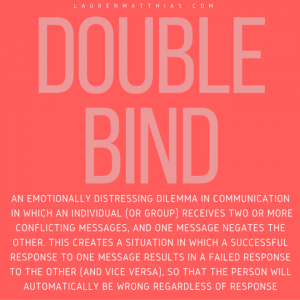
The empath curse


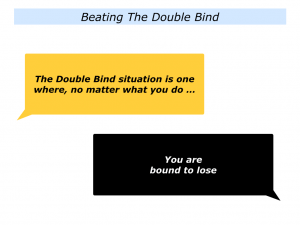
And if the child is an empath, the parent"s behavior and words are incongruent in myriads of other ways... Like the double bind...

Knowing what is good and what is bad, knowing the rules is one thing. Internalizing them in another: in that stage, when you internalize the rules, make them your own, you become a moral being. They are no longer imposed on you.

But for empaths, this is harder than for non-empaths: I think this is why I was called "amoral" as a child: I did not internalize the moral code, because of all the incongruence between people"s behavior and their words.

I had to create my own moral code, and internalize that.

I have empath students as amoral, as bumbling, as confused as I was, looking for rules to live by, but finding that it"s not that simple... Their "matzpun", their compass, their conscience isn"t working. ((The compass, the conscience, when the moral laws have been internalized, expresses itself in feelings, a pressure here, a push there... kinesthetically. The empath child wants to avoid the world of feelings where they have been hurt and confused, and move towards brainy stuff... So an empath child has only brainy guidance, mind stuff, that doesn"t care that everything and the opposite is called right... Ugh. difficult.))

They don"t know how to meet their own expectations of themselves, because they don"t have a coherent congruent self-image. They don"t have their mental representation for how to be an honorable, lovable, productive human being.

And, of course I wasn"t quite aware of what I did, or what process I had gone through, so until today I could not see what I didn"t see.

I knew, deep inside, that there was some reason I kept these "unteachable" students around, in spite of all the frustration I experienced. I was, in fact, fueled by their stuckedness, nudged on and on, to learn more, think more, so I can move them.

Here is a little 3-minute segment of a Popper talk, with English subtitles, to give you a flavor of how 60% truth value sounds.

https://www.youtube.com/watch?v=FTkIfFMvdjk

Obviously, Popper is a trained and practicing psychologist, and I am... eh, an architect? So he has been reading, seeing, understanding, and experiencing stuff that is very useful for my purposes.

And yet, but yet? we seem to look in the same place to evaluate if the "stuff" is useful or not. Where the stuff comes from, and where it takes you.

It is the most exciting thing to learn from someone whose roots, whose world view, whose moral convictions are similar to yours. Because you are validated while you are learning new things: no arguments, no resistance, no fear... I experience being OK.

Priceless. Even though he is twice, three times bigger than me, I don"t experience being small. Or big. I experience gratitude. I cry tears of joy. Love, whatever that is...

Most of my students are non-readers


How do I know? From the language they use. Impoverished. Reading articles make you a non-reader. Writing articles maybe doubly so. ((I measure your vocabulary, accurate vocabulary, distinguishing words, in my Starting Point Measurements.))
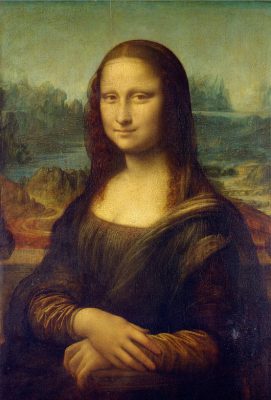
It is as if they thought that they can be artists and use five colors only to paint the Mona Lisa.

The only place to learn words, expression, is by reading. Reading in a particular way.

What is that particular way? you ask. By allowing the words modify you, influence you, move you, and observe it. From the inside, from the outside.

When your language is impoverished, your world is impoverished, because your experience is impoverished.
Most of my health consultation clients eat fast and without any distinctions. They shovel the food in, without giving themselves any time to experience. Of course, you can only experience what has been distinguished, which is largely what experience has been named. By you.

That means words. If you don"t have words for something, language for something, you cannot experience it.

Reading to get through the book, reading for understanding, reading to check it off your list leaves you impoverished both in experience and in language.
In the Playground program one of the tasks, the backbone of the program, is to look at a story, a happening, in the present, or in the past... and glean out of the story what is real. Reality.

But if what you glean, the reality, can be expressed in a few basic words, then the program won"t do its job on you, and your stories, because the contrast between your strong emotions and the reality will be too big.
One of the techniques a practitioner used on me is to take me back to a defining experience in my life, and made me expand my cone of visions to include all the colors, sounds, smells, tactile sensation, so the reality could stand there and hold its own, in the face of the traumatic emotions.

Also Dianetics has a method, called Analysis, and a book called Self-Analysis, that is designed to expand the reality inside which you had a trauma, a disappointment, a hurt.

I have bought a few copies of the book that is sold for a few dollars, including shipping.

I was planning to use it in the series: Feel your Feelings that lead to the course From Upset to Communication.

As I am listening to the partner calls, I am saddened by the reality that your life experience cannot be bigger than your feelings/perception vocabulary.

Imagine living in a country where you only know 200-300 words, and can"t even follow most conversations, because even the simplest conversations use more the 200-300 words.

Understanding, approximately, is not the same as experiencing it... and that "it" can stand for anything.

To experience something you need to be able to actively name the experience, the words.

When you read with an agenda, even if the agenda is to learn something from the book, you end up not enjoying the book, hoping to get to the end of it, as if you were hoping to get to the end of life, this two-bit existence you are living.

Your life is as rich as the things you can say. Not understand, but say. What you can"t say, you can"t even really notice, unless someone points it out to you.

You don"t want to spend time alone, having nothing to do, because your life is empty when there is nothing to do. Why empty? Because you are empty. Your fullness comes from the distinctions, the experiences, the perceptions, the richness of life.

You are terrified from the empty silence when you don"t have to do anything. You run from it... to anything.

Start to expand your vocabulary, words and sensations, and you will love to be with yourself. You will be good company.

Until then? You are, forgive me for saying this, you are boring.

Savor, chew on, ponder, contemplate. Learn the vocabulary. Let me say it again: anything you cannot express is invisible to you...

PS: I just noticed that I let that title just hang there... like a bait... and never elaborated on it.

I have been wondering why it was that in the early days of my teaching, the early days of this site, my students loved me, and today they don"t... or not really.

Yesterday, listening to Dr. Popper, I heard that when you give a child the experience that your love is unconditional, and there are no conditions that prompt you to take away that love, they will not develop properly, and more importantly, they won"t fear losing that love.

In the early days I let people go. I ejected them from a webinar, I threw them out of a course. In effect I set boundaries, and made clear that the love is not automatic.

So they clung, clawed, tried real hard. While today there is no threat of loss, so there is no value to that love.

Live and learn. Hard learning.

This is true for everything, not just love.

When in 1987, volunteering in Landmark Education, my manager said: you are fired, I suddenly, on the spot, fell in love with the job. I answered, in my head, "You can"t fire me from MY job. you can fire me from YOUR job... but not from mine..." so I continued doing the job. She fired me again and again, and every time I put more love into the job, and in the end I accomplished the impossible. In the job. A heroic result.

Without her firing me, I would have fizzled out.

One of my students, a university student, had an essay to write. He missed the deadline... and asked for an extension, and then another and another. He handed in his essay later than late.

No consequences. He was "educated", trained to do little to no work, and still pass, still stay in the course.

My guess is that this has been his life: he never got the stick end of the "carrot and stick" and he is now confused, and lost... No boundaries make for an unhappy person. Guaranteed.

Sunday, February 24, 2019

Learning to Learn on Coursera.org

Learning to Learn on Coursera.org, the missing piece of the puzzle, especially if you combine it with the Playground: the partner calls, and the skill learning challenge.

I"ve completed the first two weeks of study on coursera, with 99% effectiveness measured by the tests: only two mistakes total.. But did I learn the material? ((I am finding that I am still having some issues with the vocabulary, so no, I haven"t))

Why didn"t I take a whole week to do a week"s worth of study?

I am like a person who after weeks lost in the desert, finds good drinking water... Hungry, thirsty, excited.

I am seeing that I"ve never actually learned how to learn, I have been just lucky that some of the ways I was taught used the concepts to teach/learn effectively but didn"t teach them. Why give away all the power, right?

I have achieved a certain level of unconscious competence in certain disciplines, but I never had to go through the phase of conscious competence.

In areas of study, where I have been unsuccessful, I had no knowledge of how to learn to help me, nothing to dig me out of the rut I found myself in.

I am, I have been entirely dependent on the teacher providing the methodology and the practicing opportunity for me to produce the results.


Now, that is a tragedy, in a way, but nothing compared to the tragedy  of my lack of skill, knowledge, concepts, ideas, that would make me the kind of teacher where the student can go from unconscious incompetence to unconscious competence, without having to learn another course, a course on how to learn. I am setting a goal to become that kind of teacher...

Most of my students never learned in their past successfully, let alone learn something on their own successfully.

And yet, I have been expecting them to do just that... and of course, being frustrated: they don"t even understand the concept of learning, let alone do it.

Two days ago "the gods smiled at me", and lead me to a course on learning how to learn. I found a video on youtube... ((

Barbara Oakley talk at google
https://www.youtube.com/watch?v=vd2dtkMINIw

Barbara Oakley TED talk
https://www.youtube.com/watch?v=O96fE1E-rf8

)) that grabbed my attention.

Teachers, leaders are called bad when they change the rules... and I don"t mind being called a bad teacher: unless you learn to learn, you"ll never get the results from my courses that I promise.

Does that make my sales letter a lie? Maybe... And maybe not.

The prevailing mindset (mindset is a fixed way of thinking about something that is bigger, richer, and 90% of the time different from how you think about it) is that hearing something, reading something, will gel into knowledge.


When I listen to the partner calls of the participants in my Playground program, I find that they are like the kids who jump into the water before they learn to swim.

They actually do NO WORK on their own before they get to the call. So what is the result? two people who don"t know what they are supposed to know to do the work of practicing, so instead they have a heart to heart conversation... musings, philosophical, and irrelevant to the work.. and nothing gets learned.

So if you look, put yourself in their place... what else could you do?

0. Absorb the vocabulary... notice that words are used differently in a new learning: they are distinctions here, precise and most likely different from what they mean in the big world...

Without a working and precise vocabulary you are fish out of water.

Many of my students, when they listen to me, they "translate" what I say to a vocabulary that is neither precise, nor useful, and then they will never get what I am talking about... not the big picture, not any of it... They enjoyed the talk, but learned nothing.

Skills are made up of words... even manual activities like brain surgery.

Unless the surgeon has the exact names of the tools it asks for, the surgery will not be successful, because asking for that little shiny thing with the curved blade will not quite does it... right?

Words are the first level of knowledge chunks that you regularly miss.

  • 1. In order to create working chunks of knowledge, first you need to understand what you are learning, and see it in the big picture: how it relates to things you know, like your life, or something you have learned before.

    Without understanding you will, maybe, go through the motions of learning, but it will result in useless chunks of useless knowledge, that don"t gel into anything coherent.

  • 2. Then comes the learning of the elements of the chunk, the content: definitions, lists, symptoms, etc.

  • 3. Then comes the most important missing ingredient: recall... being able to say it/do it without looking at the notes, gradually and eventually accurately.


If nothing more happened in the partner calls, I would be still happy, ok, learning happened... But or course, there is more.

The proof of the pudding is in eating it... unless you can use the "chunks" or distinctions in your real life: recognize where it can be used, and actually use it to achieve real success, you still haven"t learned it.


Here is an example: I used the "ouch, that hurts" distinction the other day, when a woman, in spite of my urging, didn"t answer my question. I said: Ouch, that hurts... and stood up and moved to another bench...


To my utter amazement, the woman, maybe for the first time ever, looked at me, and I saw recognition in her eyes. She complimented me on my haircut, and wished me a good week...I felt that she saw me...


I suddenly felt like a person... not that chunk of meat and bones, she had seen before, and had felt a slight disgust about...


Without actually using that "chunk" in real life, I would have never known to what degree people treat me like a thing... and would have never known how to turn it around.


I also saw how I often treat people as things... and I saw how that feels. Ouch, that hurts... lol


So you see, a lot of the work has to get done in your real life, between you and you, between you and the people in your life.

And then you can bring it, as a share, to the partner calls.

Sharing as a transformational AND learning tool


Sharing is different from talking about it. Sharing is giving it over to another person, like you share your birthday cake by giving someone a slice. Unless they get it for themselves, you didn"t share.

In my work, you share transformation. Transformation is getting a new view of life, and in that new view things from the past disappear, and new actions become possible that come from that new view.
An effective share has a format... Everything else is emoting, storytelling, conversation. Not bad, but not what you want in my programs.

Why? On one hand a share looks generous, and it may be. But the purpose, the goal of the share is to make the action you took instinctual. In fact, it is a learning tool. Without it all the learning you have done before disappears and you are left with an unaltered view of life and yourself, as if nothing had happened.

And this is what"s been happening. Not just in my programs, in all transformational programs. In Landmark Education, one half of one percent of the participants learn to share their transformation.

Sharing also causes transformation... so don"t skip it. An effective share is built like this:


  • 1. Before the article/distinction/principle life was like this

  • 2. Then I got the distinction X... explain distinction

  • 3. After the distinction this is what life became... an incident that shows that the distinction/principle actually changed something when applied.


When you share, you practice and deepen your knowledge of the distinction. And you keep on re-opening that new view of life that is the key to your transformed life.

Here is how I explained in an email to a student who wanted to learn to share... so far unsuccessfully.
I used to have daily struggle with my daughter. She misbehaved, she threatened to kill herself, she told me she hated me. It was hell.

Then I learned a distinction: I learned that I have been looking at her as MY DAUGHTER, a role, who is supposed to behave in a way to make my life easy, and make me proud. But that is just one way to see... I could see her as a person, who has as much right to life as I do... and the DAUGHTER role is limiting her in her freedom to be herself... to be a person.

I decided to try it on: treat her as a person.

and then you can tell what happened... and what would have happened without the distinction in a real situation.

Sharing, using that formula to share is like a recall exercise: you cannot do it unless you have the distinction down pat.


So even though you feel that you have learned, you have the illusion of knowledge, not being able to recall wakes you up that in fact you haven"t learned it: more work needs to be invested.

For example, a student, after watching the hour-long video that introduces the concepts of learning to learn, used the word "chunking" incorrectly. He is now, possibly, fancying himself fully equipped to know how to learn...

And that is not an isolated example: I do measure to what degree you are delusional about your knowledge, about your abilities, about your attitudes in the Starting Point Measurements.

Any number above 10% is a reason for concern, and indicates a serious issue with your ability to see things accurately, with being astute.

Your actions will come from what you see, but if what you see is delusional, all or most of your actions will be inaccurate... and you can see what kind of life that leads to...

PS: Some people opt to have coaching calls with me.


Those are quite expensive. The assumption is that you"ll learn what I know, learn what I teach through listening... but that has never happened and probably never will.

All coaching calls introduce concepts, principles, distinctions, that need to be learned... If you can"t learn them, don"t know how learn them, or won"t do what it takes to learn them, your net benefit from a coaching call is meager... Because it is not more valuable than reading a book.

Now I am starting to understand why people thank me for my time at the end of a call... they got my time, and that"s that.


Similarly, reading a book doesn"t teach you anything. Watching a video or 10 doesn"t teach you anything. ((Of course, if you are already an expert in the field of the book, a book and a video does teach you... In fields where I have enough chunks of knowledge, health, transformation, energies, everything teaches me, because I have chunks of knowledge by the thousands... and I have the art of transferring and connecting the dots. I am starting to see, it would be better and more accurate to say: connecting the chunks... chunks of knowledge.

But in areas where I only have a few, maybe no chunks, reading does nothing to create learning for me.))

Teaching happens when you learn. When you use the principles and the practice of learning.


For actual learning to take place, the ideal proportion of input (a course, a video, a book, an article) and implementation, ie doing what it takes to learn it is 1:6. In certain disciplines, like marketing, it is 1:10.

Meaning: you get one hour instruction, and then you spend 6-10 hours to turn it into knowledge you can use.

You think it is over the top? Exaggeration?

Not really.

In architecture school, we had 44 hours of instruction a week, and 90 hours homework assignments a week. Why not 1:6? Because many of the classes were also recall or practice, not lectures Also... There were not enough hours in the week to sleep as well. A week is 168 hours long...

The more you have learned in life, the faster the learning process will be, because you have useful chunks of accurate knowledge that are on the ready...

But beware of the inaccurate chunks of "knowledge"... they will get you stuck every time.

Here is the link to Coursera.org"s free Learning to learn course

I have also opened a new thread in the discussions forum for the Learning to learn course. Of course, you need to register to post...

Saturday, January 19, 2019

I am starting to change my mind about Jordan Peterson. Here is a 60% truth value video

Yesterday I found a quote that shook me to my core... So I want to start with that. You could say: that quote accurately expresses my attitude about life... and I am moved by that ((Sandy Koufax was Jewish, and his attitude was what made Jews survive all those thousands of years of exile, all the persecution, and come out, when they did, on top... ))

https://www.youtube.com/watch?v=dJyz6iK8VXE

It is 60% truth value, not because 40% of it is not true, but because it doesn"t quite distinguish the path, doesn"t look at the invisible dynamics of life it a way, that people can catch themselves as they make themselves miserable...

It is never circumstances, nor other people that make you miserable, it is your inability: lack of distinctions, to see exactly what creates your attitude and behavior.

You can"t catch what you can"t see! And lack of distinction is the cause of it.

Distinction is the ability to tell two things apart, even if and when they are very similar.


Until you can... and to the degree that you can"t... everything is the same for you as everything else... you are a bumbling idiot when it comes to life.Example: You have a feeling. You know four names for a bad feeling... so you use the words your know. But the feeling is not that... so you cannot see where it"s coming from, you are not going to be able to catch the color of evil inclination... and you"ll remain the same: self-hating, miserable.

Jordan Peterson"s accurate vocabulary is 1000 words... higher than most, but not enough to help you much... My vocabulary is 5000. The vocabulary number is about the words of behavior, attitude, emotions, values... the words that allow you to navigate your own psyche, navigate the world of people, to accurately assess what is in front of you, values, etc.

But his meager vocabulary is still 3-5 times larger than yours. In the current Playgrounds I have three students with as high a vocabulary as his... three with 5 times smaller, and two with three times smaller.

If you ever want to feel like you are a match to life, equal to life, enough for life, you MUST increase your vocabulary of feelings/emotions/attitudes.


If you don"t, there is nothing that anyone can do for you! I am shouting, I know, and you are cringing, I know...

So get off your ass, and do something for yourself! The cringing shows you that your TLB is 1... you are soft and a sissy.

There is no good life for a sissy... you need to get that. Life takes work, and work is hard. Life takes learning, and learning is hard. Life takes seeing... and I promise you, once you start seeing, it is both a blessing and a curse. You"ll rejoice in the richness... and you"ll grieve the ugly... But all in all, unless you can see, you are not living...

If you are a parent, create a project with your child or children to hunt for words that express a state of being, an attitude, a feeling.


I am working on the positive feelings, attitudes, right now. I learned "jaunty" and wrote an article about it. Yesterday I learned "jovial". I could get more diligent, but I don"t want to do it with a homework attitude: the attitude that works best for me is discovery, a sense of wonder, delighting in the added color on the fabric of life, each new word provides.

  • This is why I have been reading, exclusively, fiction for the past many months.

  • 10-30 books by each author I carefully choose for their writing ability.

  • Each author has a limited vocabulary that adds a few hundred to mine.


Even Jordan Peterson has added a word or two to my already large vocabulary, thank you very much Professor Peterson. I think I needed it.

His words add another dimension to my vocabulary, a dimension where I have been weak in: inspiration, talking to your intrinsic sense of greatness, and possibility.


I have still a lot to go...

You won"t learn new words unless you set it out as a task. It isn"t like it will infect you, or enter you by osmosis... that is not the nature of reality... or not quite. If you COULD read or listen in Theta brain wave mode, the mode of learning, then you would, but I personally don"t know anyone older than six years old, who is listening in theta mode...

In theta mode you don"t mount a filter to protect your special "I", you don"t mount a filter to protect yourself from finding out that what you know is actually not true... in Theta mode you are like a sponge.

And so were your children. And the soaked up your level of humanity... and you are surprised that they are not better people, that they don"t measure up to your high standards... which you yourself don"t consider a standard for yourself.

Ugh... ugly.

So, regardless where you are... create some circumstances inside a commitment to grow as a human... and please know, that without a larger vocabulary, you cannot grow.

Your vocabulary limits you to a certain level of being... and unless and until you grow your vocabulary, you are stuck there, and there is nothing you, me, or your favorite magician can do to unstuck you...


Voodoo won"t do it for you. Mind movies won"t do it for you. Energy clearing won"t do it for you.

Only actually learning new words will do for you.

It"s OK to start with good, nice feeling words, but given the principle of strait and narrow, learning bad feeling words will be a lot more effective.
Why? Because if something has a name, then you name it and you claim it, and own it. When you can own it, it allows you to be whatever you choose to be... instantly.

While if you start with the positive, nice, better feeling words, you will... most likely, pretend to be that... and pretense is lying... pretense won"t allow you to face the truth, pretense is all to blow smoke up other people"s ass... so they like you...

And then you can"t grow.

So start with the bad feelings. Don"t stop until you get at least 300...


Each word will give you more power... Sounds counter intuitive? What humans call intuitive is not... instead it is indoctrination to slavery. So move towards the counter intuitive: at then end is what you have always wanted: becoming a person. Yeah, a person. And individual.

One in a million.

PS: everyone wants a high or at least higher vibration. But whatever the people on the internet say about vibration is wholly b.s.


They don"t know... and they sound like they do...

But if you examined their vocabulary number: it is low.

  • David Hawkins, vocabulary: 1000.

  • Christie Marie Sheldon, vocabulary: 300.

  • Abraham/Hicks: vocabulary: 400.

  • Vishen Lakhiani: vocabulary: 700,

  • Karen Berg of the Kabbalah Centre: 300,

  • Michael Berg: 500,

  • Jack Canfield: vocabulary: 500.

  • Tai Lopez: vocabulary 700.


Tai Lopez teaches an interesting principle, the "law" of 10%. It says that you can learn 10% of another"s knowledge, or whatever they are teaching.

So if you want to grow fast, pick someone whose 10% is a significant growth for you, not someone who is just slightly and comfortably above your level... which most people do.

And especially in this fundamental capacity, being able to distinguish and name feelings, attitudes, emotions, values accurately, don"t pick someone who can 10X your vocabulary... or you are wasting your life with easy.


This doesn"t mean: don"t listen to anything they say: just don"t learn vocabulary from them...

Jordan Peterson has a bigger "bad attitudes" vocabulary than most, and maybe bigger "inspiration" vocabulary than me...

I know all the bad words, but didn"t know the inspiration words... so he can teach me something... but his real value for me is that he casts his net wider than me, including politics, and such, I have no clue about...

But if I want to learn inspiring words, I am better off studying the famous orators... and I even own a book, big, heavy, lasts a lifetime.


When I learn a new word, I spend at least a few days to make it instinctual... to be able to recognize it even if there is a smokescreen... So I learn, really learn, only one new word every few days.
Some words, like generosity, authenticity, integrity, loyalty... and such took me years each... I started this learning new words around my 40th birthday.

Once you go over the hump... the words come fast and furious, and your growth comes with it.

So if anyone asked me, nowadays, what is the most important activity you can take on to raise your vibration, I would say, without hesitation: increase your negative feelings/attitudes vocabulary. It works like magic.

What should be your first words you learn: just go to the Bach Energies page

I just checked, and I am sure I have an even better page, where the negative energy of the feeling is expressed better...

I will be looking for that list, and come back here and post it... Just check back again later.

In the meantime, read these two articles:

https://www.yourvibration.com/38204/work-raise-vibration/

https://www.yourvibration.com/41786/invisible-components-success/

Tuesday, January 15, 2019

Why your clarity-vocabulary number is so predictive of your success, happiness, and life enjoyment?

If what we need is a larger vocabulary so we don"t fall into the trap of the mind where everything is the same as everything else, that it makes a lot of sense to start, as soon as you can, building a larger vocabulary.

With every new word a large chunk of the invisible reveals itself... priceless.


Here is the first word:

Jaunty. 1. könnyed and 2. vidám in Hungarian, I have to admit that in the past 37 years since I left Hungary, I haven"t seen anyone Jaunty... Maybe I saw them obnoxiously loud and too much smiling... but jaunty?

Jaunty is having or expressing a lively, cheerful, and self-confident manner, cheerful, cheery, happy, merry, jolly, joyful, gleeful, glad. It is not the forced jolliness of pretense. And it is not the drunken glibness of the party. It is beautiful and it is natural. And I am, occasionally that, but haven"t had a word for it.

When I look at people"s reaction to it, they cheer up and smile with you...

Here is the famous ending of the movie, Harold and Maude... and Harold finally ridding himself of death... is jaunty... yeah, that is what is is on that hill with that banjo...

https://www.youtube.com/watch?v=DPqxNzhyp7w

What you can"t say, you can"t easily be... or maybe not at all.


The most useful thing about having an accurate name for the emotion that is jerking you around is that when you can name it, you can claim it, and the emotion goes away... or at least changes.

The least effective people are the people who can"t or won"t dare name the emotion in fear of what it means about them, and then they are stuck, for a lifetime, in that emotion.

The battle turns inward and the two selves develop an intense hatred for each other. No chance for self-love, and no chance for a life you can love.

Fear is one of these suppressed feelings.... oh, fear is a feeling... it is an orienting feeling, warning you to be mindful, alert, and beware...

It doesn"t last long when it is not resisted... it is orienting you to pay attention, but move regardless.

When resisted, it tells you to shrink, to withdraw, to stop living.


Fear is your friend... it stays only for a little bit, like a breeze... telling you to stand on attention, something is happening, something to pay attention to.

I attempted to look up a word for paralyzing fear... instead I found some synonyms... fear, dread, fright, alarm, panic, terror, trepidation mean painful agitation in the presence or anticipation of danger. fear is the most general term and implies anxiety and usually loss of courage.

Painful agitation in the presence of danger... ineffective.

The biggest issue is thinking that life should be smooth, that things should not happen or threaten you to happen, that life should be safe, comfortable, nice, smooth, easy, and none of your actions would be needed and necessary to live life effectively.

Expectation is the biggest enemy of effectiveness.


This culture of Tree of Knowledge, where everyone acts as if things should be in a certain way, the right way, the government, the president, your spouse, your son, the weather, even your dog, your boss, your teacher... is the source of your displeasure with life, in life.

The Tree of Knowledge refers to the Tree of Good and Evil in the bible. The Tree that suggests that there is such a thing. That you can know what is good and what is evil, and what is right... and force everyone to see things and do things your way.

That Christianity, or Islam, or vegetarianism, or communism... are the right religions, world views, and everyone should accept them, and adapt to them... And kill them, hate them, persecute them, judge them if they don"t.

The Tree of Knowledge is ignorance. Ignorance of the fact that the order of things is not simple, not according to YOUR favorite rules, that the order of things is through chaos that works itself out.


Science has been working, sometimes feverishly, to penetrate the secrets of the universe to come up with a Tree of Knowledge solution to the human desire of simple good rules...

Thousands of years... lead to a grand result of 7% truth value... meaning 93% is hogwash or hasn"t touched upon.

But humans, the inane, stupid, blocked, clogged (like the sink that doesn"t empty!) species hasn"t been willing to be "jaunty" and tread lightly, and stop trying to fix life and the universe with rules that don"t help, with bombastic "truths" that are not true.

I read somewhere yesterday that humans didn"t evolve from the great apes... and that is probably true: in many ways humans are a devolvement... backwards growth, or the great apes...

Obviously I am experiencing a sense of powerlessness, helplessness at seeing that there is nothing I can do or say to change this, even for a few people... but I might be wrong.

If I consider myself a force to reckon with... a force of nature, then all that powerlessness and helplessness eases up and is replaced with ingenuity, creativity, expressiveness, and patience...


Why?

Because evolution takes time. Because evolution is not immediately visible to the naked eye.

Last week I had two Playground sessions: one for the women, and one for the men.
  • After the women"s session I was almost giddy... hopeful, anticipating great strides...

  • After the men"s session a sense of doom


But listening in on the partner calls I found out that the women didn"t get any of it... all my teaching rolled of their back, like water rolls off the duck"s back, while the men were deeply touched, and I heard the most eloquent shares of freedom, and ease and grace in my whole career as a "spiritual" teacher.

Go figure... right?

Just keep on doing it...

And keep on filling in the gaps in people"s understanding of life...


I had a webinar to discuss the 20-day challenge yesterday in the afternoon.

I got really angry and vocal about one student"s behavior and railed against her continuing to be that way.

I felt reluctant to release my fury... I was hesitant to, perhaps, alienate people... And it turned out, instead, I managed, finally, to shed more light at the distinction: inauthenticity, which I"d thought has been clear to everyone...

Life is unpredictable, no matter what level you observe it... and the best you can do is: stay on your feet, and keep on dancing, keep vigilant, and love life in all of its unpredictability.


There is no right, and there is no wrong in reality. If you can consider all that Tree of Knowledge crap your personal crap, then you can go past it, you can have room for it, and you can call it "your preferences".

Just try it out: if you say: Life is dealing me crapola: cold weather, a stomach ache (or whatever you don"t like), and ungrateful people... while I have a preference for comfortable weather, no pain, and people who just swoon from what I say to them... lol.

Can you see the lightness in that last sentence? Yeah, suddenly, having written that, I feel jaunty... giddy, happy to be alive... lol. So much fun!
.
.
.
.
PS: A little aside: I added life enjoyment to the title just now.


I am making breakfast for myself. Two eggs in a savory soup. Poached eggs... The Hungarian word "buttyantott" is more expressive... it depicts the effect of the hot water on the eggs... and brings the drama of poaching, keeping the water just below boiling temperature, to the culinary experience.

The trend of more and more complicated dishes is in strict alignment with the impoverishment of your vocabulary about tastes, textures, and what is good and what is unpleasant.

And the decrease of your health.

One of my students, I just found out, learned from me to use less and less ingredients in her cooking, in the dishes, and now she is cooking simply, where the natural flavor, the nature of the ingredients is not overpowered by the "too may ingredients" trend of cuisine.

I grew up in Hungary. The most complicated dish there had 5-8 ingredients... including fat, salt, and pepper. No pre-made anything... sauces, spice mixes, except maybe prepared mustard... I first experienced the "leveling" effect of Western cuisine in England with the Worcestershire Sauce... where everything tastes the same...

This is the Tree of Knowledge principle applied to food... reducing our experience to prefabricated rights and wrong.


Ketchup... ugh. BBQ sauce... ugh. Mayonnaise... ugh. Dipping sauces... ugh.

With all that said: I am in the sweet and sour experimental phase... and can tell you: when everything is made sweet and sour, you can eat a lot of crap under the disguise of sweet and sour... you won"t know what it tastes like... the sweet and the sour dominates.

PPS: I had an epiphany this morning when I read Rob Brezsny"s horoscope email:


I had (weep weep) a client whose strongest skill, according to him, was his imagination. I gave him exercises to make his strength shine, to develop it more.

Imagination is good... but then the whole thing turned bitter and sour.

With some regularity he got snagged in the Desire Trap... And I didn"t know what to say to keep him safe. As it turns out, I lacked a vocabulary distinction between fantasy and imagination... Desire trap is engages fantasy... Creativity engages imagination...

This was the sentence that brought clarity for me:

Hint: It will help if you keep working on transforming your imagination from a mere fantasy-generator into an organ of perception.

Wow. I stand humbled.

The world (mind movies, and other b.s. programs) encourages you to create fantasies while reality and achievement works with imagination: an organ of perception, of connecting the dots, or noticing opportunities, noticing an open path...


Books, movies, pull you into fantasy worlds... while you notice and distinguish nothing in your life... in your actual life.

When I was listening to people sharing their 20-day projects with me yesterday, I can tell I didn"t have the distinction between fantasy and imagination...

Imagination is a bridge creating tool between now and there...

Fantasy is experiencing the finished project and the happiness it will create...NOT!


Imagination helps you to enjoy the process...


Fantasy jumps and makes the process and your attitude: happiness comes when I am done... as soon as I wade through this boring, unpleasant, frustrating, difficult part: learning whatever I am learning.

If this talks to you... it is not too late to stop fantasizing about the end result, and start enjoying the sweet and the sour, and the salty, and the bitter, and the astringent, and maybe even the pungent... without having an opinion that makes them good or bad or ugh...

Astringent.
Bitter.
Pungent.
Sour.
Salty.
Sweet.


https://www.youtube.com/watch?v=FhM-ZPZO8JQ

https://www.youtube.com/watch?v=EKy19WzkPxE

Sunday, October 28, 2018

Why you are not, in fact cannot be curious? Are you screwed now?

I have decided to re-read the Feelings book, and this time make it a study, memorize the names of the different needs, take a more earnest approach to learning the "language" of the machine that is need-based.

I am feeling a mix of fear and excitement. where? in my stomach, expanding to my chest.

My plan is to read/study the book is to study it at the beginning of my evening reading session for about 10 minutes, and then switch to my "other" book... whatever book I am reading in the evening at the time... currently it is "Curious" by Ian Leslie.

I am reading Curious for the second time, and this time it is, given the chance, going to change something in me and consequently in how I teach, how i guide, and what I expect YOU to do.


I am not a Bible reader, in spite of the fact that there are a lot of "before its time" brilliant sayings in the bible.

One of them is a principle, timeless, portable, and scary as hell: Matthew 13:12

For whosoever hath, to him shall be given, and he shall have more abundance: but whosoever hath not, from him shall be taken away even that he hath.


These dudes who supposedly scribed (transcribed) the gospels - I say scribed because the gospels, supposedly, were the written notes of the disciples... what the disciples heard Jesus say... Judging from what my students hear me say, if there was a Jesus, and if he said things, the likelihood that he said those exact things is between zero and none. Why? because Jesus picked uneducated people to teach, and they had no foundation, no framework, no education, no vocabulary to hang the smart things Jesus said...

This is, by the way, how you know that the gospels were written hundreds of years later by well-read well-educated church people... and not the not-educated disciples. But there is wisdom there, and I don"t want to argue that.

According to Osho, the most wisdom is in Matthew"s stuff... and this principle is from there.

In the context I am looking at that principle, in the context that I am asking you to hear that principle is curiosity... your fitness to live a life you can love.

If you have no knowledge, some knowledge, in a certain are, you cannot be curious about it, you"ll have nothing to sustain your curiosity. In my humble opinion, bedtime stories may be the best foundation of "some knowledge". And id you observe, children watch the same cartoon a hundred time, if you let them. They know something that you don"t: repetition is the mother of ALL learning.

What does curiosity have to do with a life you can love? Everything.


The human machine, the machine that is best studied by an engineer who, supposedly and by definition understands machines.

The author of the Feelings book, Margoczi, is a Hungarian engineer, who studied engineering in Russia, in Russian, by the way, and the truth value of the Feelings book is 60%. Very very very high.

For shits and giggles... Margoczi is also a business owner, and he is not good at it.

Why? because he hasn"t carried over his knowledge to the area of marketing.

He and I are similarly educated, and have made the same mistake... with the difference that for me, reading the Curious book by Ian Leslie, put a BIG FINGER on the problem:

no matter how much I read or study about marketing, my head behaves like a sieve... none of the knowledge sticks.


I have no foundation, no network of knowledge, no latticework to hold the information with in the area of marketing (substitute your area of ignorance here!). ((

https://www.youtube.com/watch?v=ShJqSoUdUGI

Here is a metaphor of how this works, or why you can"t hold onto information, unless you already have some... a metaphor from nature: if you drop seeds on ground that hasn"t been cultivated, prepared, loosened, the seeds may germinate, but never become plants, because the roots cannot penetrate, cannot hold onto the uncultivated soil. Same in the desert. There are some videos on Youtube that show that you can turn deserts into oasis by creating some foundation that allows the seeds to grow into plants.

So how do you build a foundation if you are 71 years old (substitute your age here).


Ian Leslie says (and I say! judging from my experience with new and older students) that learning the vocabulary, the exact words an area uses is going to build a latticework.

So I have started... I watched a 40 minute teaching webinar by Frank Kern, and took notes. And now I am going to consider it a language learning course... it will take as long as it takes...

One of my students has done this in the area of context...


When she shared with others that her invented context for the Playground is that it is a PhD course that takes a year or two, the other students weren"t getting it. They lack the vocabulary of context... and the vocabulary of word-to-world cognitive reality creating knowledge.

So for them it was just noise coming out of that student"s mouth. Or looked at in another way: she dropped the seeds on desert sand... The sand is not able to receive the seeds and sustain them.

And not surprisingly, the more ignorant students like to hang out together and chit-chat, where everything makes sense, where they know every word.

One of the benefits of transcribing my audio-articles is to struggle against the mind"s inclination to change the words to words you already know... instead of typing the word I say.

I sound like an alien until you learn the vocabulary.

Margoczi sounds doubly like an alien... one reading is not enough... so even though I have two engineering degrees, I am going to study it, like a foreign language, until I get fluent with it.

Am I going to suggest to Margoczi that he should learn the vocabulary of marketing? I don"t think he would be open to it... but I might risk it.

Until someone discovers their own ignorance, themselves, they deny it, or they consider it OK... either way, they kill the messenger (treat the bearer of bad news as if they were to blame for it.)

Every time I mention ignorance in the title of my articles, people don"t want to read it...

But the art of the curious is that they are ready and willing to recognize and feel the lack of knowledge, their ignorance, and they behave like their machine is programmed, the human machine, seeking to fill the void by seeking information.

If you read the book Feelings, you"ll get the aberrant behavior of wanting to ignore the inner and natural need to know what area of life you need more information and knowledge.

This is what I call, by the way, intelligence... OK, now you can kill me... lol

PS: this video shows best how even the little you have is taken away if you don"y add to it.

https://www.youtube.com/watch?v=cl0OYNgjqqY

Saturday, October 13, 2018

Your vocabulary is a predictor of your abundance... or scarcity

This post, this audio is a little on the choppy side, because you are witnessing me entering the invisible and making new connections, connecting some dots. Brilliant if I may say so myself... :-)

Saturday, June 30, 2018

A spiritual practice that can change all the numbers in your Starting Point Measurements

If you"ve bought into the b.s. that thinking good thoughts, happy thoughts, being non-judgmental is good for you, ((Over 1 TRILLION, that is a thousand billion pages tout the misdirection perpetuated on you!)) then your vibration is low, but more importantly, your vibration cannot be raised, unless you let go of this b.s.

Let"s turn this baby on its head: if you bought into the b.s. that your thoughts create your reality, and you need to avoid thinking bad thoughts regarding yourself, the world, the future, other people, because it makes you and your life bad... then there is nothing I can ever do for you, unless you change your mind.

Why? Because you refuse to interact with reality, you refuse to base your actions on reality.

Reality is neither good nor bad, it is what it is.


  • Things mostly don"t turn out.

  • People are doing whatever they are doing, and they are hardly ever doing good things, right things, neither for themselves or for you

  • Work is hard, or boring, and to learn anything new you need to feel stupid, weak, incompetent, and you probably are.

  • Things don"t fill you up, and your life is meaningless. You"re responsible for all of it... and it doesn"t feel good at all.

So you see that for life to work for you, you need to be able to be with, without losing power, without covering your eyes, with life exactly the way life is. Good, bad, ugly... all of it.

That positive thinking b.s. trained you to be a Twitchy Little Bastard, a sissy, a wuss, a weakling.

Facing reality needs you to raise your TLB.


One of the alarming symptoms I see on my webinars is that people are unwilling to critique, assess, evaluate their peers.

In your head, I know, you judge them.

But judging is a low vibration, low intelligence, low evolutionary activity, because judging means you use the two prong approach: good/bad, nice/nasty, etc. level.

Assessing, assessment is a method that goes beyond the two prong: you actually need to see, need to notice, need to accurately identify what you see. Behavior, looks, knowledge, attitude, speaking, relationship, etc.

If you don"t know the difference between judging (two prong, opinionated, guilty/not guilty etc.) and assessment (red, pudgy, harsh, loud, overwhelming, rambling, self-promoting, etc.) then you are stuck in the lowest gear of your "vehicle" that can take you to success.

Your accurate vocabulary of reality is low, and your vibration is low. With your low numbers, you make poor decisions, you listen to the wrong people, you fancy yourself superior... while your results are pitiful, your actions don"t amount to much, and you suffer.


You need to learn to assess, richly and accurately. But because you can get to rich and accurate assessment, you need to crawl before you can run.

And you need to make it a practice.

This is what happens when you first do that: you"ll take your eyes of the imaginary focus that your judgment implies.

You will still judge. Why? It is a habit. But you won"t be stuck on that level...


The other day a new person joined the exercise class for older people.

I asked her name, introduced myself, shake hands.

And then I did my thing... which she didn"t like. She was frowning, scowling, staring at me.

Obviously I had a judgment about her... But I caught it... and started to expand the cone of vision, and noticed her hair... wig. Noticed her body... skinny. Noticed her legs... wobbly. I didn"t even have to go beyond that third assessment: I felt wild compassion for her. She was frail, weak, and her legs barely carried her. And I was OK with her judgment of me...

Obviously this is easier for me that it is for you: my accurate vocabulary 5,000, and yours is probably below 1000.

Most people I measure clock in around 300.

But doing this exercise religiously does several things in your Starting Point Measurements:


  • 1. it takes your attention off me-myself-and-I

  • 2. it forces your awareness to grow, little by little

  • 3. it takes you out of Plato"s Cave, the mind. Inside the mind you cannot do this, you have to come out and look... in reality.

  • 4. it increases your accurate vocabulary AND your worth a damn factor... slowly but surely. Your vibration cannot be far behind...


Notice that I didn"t say: say something nice about them... that "nice" comes from positive thinking, or wanting to be nice, or make it all right... all low vibration inclinations. No. I said: start noticing other things about them, things you can see, right now! Physical characteristics, or facial expression!

If you go to the past, into your memory, to excuse them from wrong-doing, or to remember that you like them, love them, etc. then you are doing an exercise to lower your vibration!

This exercise is a lot like my "locate your feet" exercise.


The goal of this and the "locate your feet" exercise is to bring you to the here and now, out of your mind, out of your internal dialog, out of Plato"s Cave.

I have students who don"t understand that, and they remain in the Cave...

Because how you do anything is how you do everything.

The magic this little exercise does, done several times a day, forever, consistently, is bring you out into reality, where life is. And that is the hardest and most significant thing you can do for yourself.

What if the person judged is yourself?


You judge yourself all the time, don"t you? And you are not kind to yourself. Or too kind... if you have narcissistic tendencies, which are obvious if your delusion number is higher than 30%... this number is also part of the Starting Point Measurements.

So you catch yourself judging yourself... the process is the same. All judgment happens in the cave of your mind!

So let"s say I make a mistake and accidentally destroy a new equipment I just bought for a lot of money. Irreparable.

I pass the judgment... and then look at things that are not in my mind. I am still alive. I am walking. I am hot. I am cold. I am dressed in shorts and t-shirt. I am breathing in gasps. I am frowning. I have short hair...

I do it until I am sure I can see a person there and I can hold the image of a person, instead of that a**hole who did whatever I did.

In essence, I located my feet.


What causes the physiological changes is not forcing my breath to slow down. Not forcing my face to smile. Not thinking positive thoughts. No, what causes all that is widening my cone of vision, and looking in reality.

Everything, everyone, every bad thing is a tiny and insignificant part of reality. Only when your cone of vision is filled by it then it"s a big deal.

You are not conscious of your cone of vision, this is why you need exercises to widen it.

I have to do this, some days, 10-20-30 times.


The other day I was talking to someone who was rubbing me the wrong way. I had my finger poised over the "off" button... every fiber of my being wanted to hang up on her. But I kept enlarging my cone of vision, diligently, for the entire duration of the call. It was work, it was hard, but I did it. And I am better for it.

Now, do I want people who rub me the wrong way in my life? No, I don"t. So I let her go... But not while I was reactive, not because I had a judgment. I did it after the call... sat with myself, and looked if this person I can contribute to, if this person adds anything to my life. Not from judgment: from assessment.

Here is another example: your loved one, your spouse or your child is misbehaving in public.


You are upset. It feels that they upset you, but truth be told: you don"t want their behavior reflect badly on you. You want to preserve your "I am good" delusion, and your precious "I" is what is making you upset.

The practice is the same. But this time you need to take your eyes of your precious I, and look at the person, or persons, instead. And start noticing things about them: their hair, their teeth, their facial expression, their posture... make sure you add words... no words, you are still in your head, you are still about yourself.

It will be hard... but it will set you free. And it will allow you to add moments to your life when not everything is about you.

I"d hate to be your child, I"d hate to be your spouse... If you can"t find even moments when you are not about you...

I had one moment with my mother when she wasn"t all about herself. When she saw me for the first time... It lasted a few seconds. I was 45 years old.

And I also remember the moment with my mother, when I first saw her as a person... not who she was supposed to be for me.

Life alters when you do this exercise the way it is supposed to be done. In reality.


Want to know where you are at? Here is to order your Starting Point Measurements