 Let"s start with debunking the current world view, that intelligence is inborn. We are all born tabula raza... a blank slate.
Your intelligence depends on the number of large chunks, neural connections permanently formed in your brain firing together automatically. Those chunks are created in learning.
Reality has two parts: the visible reality, the part that can be perceived by anyone, and the invisible reality that is governed by the invisible dynamics... that you actually need to learn to see.
The invisible reality is an iceberg: the visible part provides clues for the invisible part: that there is something invisible yet real. Depending on how you look at the visible part, through what vantage point, you are going to see different aspects of the invisible. One of the ways, one of the vantage points to look through is the learning to learn course. ((In this article I am illustrating my own method of how to learn something using the "zone of proximal development" by connecting the new material to already strong distinctions. The zone of proximal development is the area where you already have scaffolding, furring strips for the new distinction to attach itself. Most people have very few and very sparsely... and the illusion of knowledge prevents them from actually creating those islands of knowledge... ))
The principle of intelligence is: the more problem solving chunks your brain has, i.e. the more neural connections you have, or speaking in transformational technology terms: the more distinctions you have, the more difficult problems you can solve.
Life is full of difficult problems that you can either solve or you suffer. The most pain comes from other people.
When I measure how many spiritual capacities you have active in your DNA, the correlation between the number of spiritual capacities, the number of distinctions, and success in life is obvious, although the why isn"t quite obvious... yet.
What qualifies a "spiritual" teacher to teach, is that they are one step ahead of their students, one lesson...
At least that is what I thought until this morning.
But...
So... I just finished the Learning How to Learn Course. I learned a lot. I also learned that as a How-to course, it teaches you ABOUT how to learn, but learning to learn is a whole different animal... unless you can turn the how-to into actual learning, learning will not take place.
But the tools and techniques in the course are useful, so someone, maybe me, can actually teach you to learn.
Gradually. Hopefully. Finally, for most of you.
So I have decided to set myself out on a path to learn to teach, to teach myself to teach: teach at least some people to learn. To create distinctions, neural islands of neurons that fire together, automatically. ((The book on Brain Plasticity: The Brain That Changes Itself: Stories of Personal Triumph from the Frontiers of Brain Science by Norman Doidge MD. I read that book. It talks about learning that is not intellectual, therefore even YOU will get that knowing about it, practicing it a little, won"t create the neural automatic island of connection: it talks about blind people learning to see through a patch on their body, a paralyzed stroke induces arm or hand learn to do the movements it needs to learn, etc.
That book really pokes a hole into the worldwide myth that reading a book, watching a video, taking a course will create working knowledge in your brain. If for no other reason, read it if you can. I only have the printed version, so I can"t gift you with the book, sorry.))
In this context, my learning effectiveness: I will measure my success in the active distinctions that work within you... automatically. In the context of the Playground course, whether you can see, automatically, if something is real or not, without having to look at the pdf... Or whether you look "what is the complaint?" without thinking when you are not happy...
A distinction is a group of neurons, in the brain, that gets some work done, without you needing to be conscious of it.
Chewing, swallowing, throwing a ball, are simple distinctions that you can, as an adult, take for granted. No conscious thought required. But when you learned it, it had to be first conscious, and then, through practice, unconscious.
Depending on how many neurons it takes to perform a task, the distinctions are simple or complex.
Distinctions are the key elements to intelligence, intelligent behavior.
Here are a few examples pointing to missing distinctions, and the resulting lack of intelligent behavior:
1. This civil engineer...
...was visiting an environmental cleanup site. The stuff to clean up was very dry, and the wind blew.
Engineer or no engineer, our guy didn"t think of putting a handkerchief or a filter over his mouth and nose... so he breathed in the stuff that was deemed an environmental hazard. Now he is coughing, and he is worried.
He has distinctions about some stuff, but not about others, like if it is bad on the ground, it will be definitely bad in his lungs...
Intelligent behavior is impossible when chunks of knowledge is missing or is overpowered by some other concerns... Like wanting to look like a hero, fearless... because the concern would call a dude with filter over his nose and mouth a sissy...
Diagnosis: distinction is either weak, or the concern is too strong... Causing lack of intelligent behavior.
The next thing to do, for this person, is to deal with both issues, missing distinction AND the concern.
2. This university student
has been in my courses, reading my articles for nearly six years, without ever making a lasting impact on his life.
He comes up with new ideas about why that is, at least once a week. They all sound brilliant. Astounding. Yet, his results in life, in any area, are between zero and none.
Looking at his behavior through the distinction of the how to learn course, I suddenly saw something.
One thing has been bothering me about him for a few months now: even though he knows how to energize his water, even though he knows how important that is, his cell hydration, habitually, drops to scarcity level.
He doesn"t take care of it. He doesn"t drink the coherent water that would keep his cell hydration number above 30%, or maybe he simply stops making it? I haven"t asked. But it is obvious: cell hydration isn"t a distinction for him, it is not automatic for him to make and drink the coherent water... no chunks, he has information but no knowledge. ((In the past six years this student got a disproportionate amount of attention from me... and has managed to turn all that teaching, all that guidance into a big fat zero. His brilliance helped him dupe me... but didn"t help him to create a life worth living for him.
https://youtu.be/DJTt5I8K4Rk?t=30
Somewhere in my reading, actually many places, animals use deceit to lure a predator away from their young. This student uses deceit to lure me away from that fact that he won"t learn.))
As I said above, a distinction fully operational in your brain will work without your conscious thought... So until a distinction, in his case, making and drinking his energized water so his physical self is well enough to support what he is doing, we can safely say that he has probably no useful distinctions in his brain, no chunks, no useful learning has taken place, that would make him act intelligently in life.
He has the brain of a newborn. He may have rules from religion, from his parents, from himself, but they don"t form distinctions, they don"t physically manifest in his brain.
So what prevents him from forming those distinctions? If you think that the two cases are similar, you are right.
What prevents him from forming those distinctions is a concern.
This university student throws everything in the wind, so he can get his concern met: that he is viewed and that he feels brilliant.
That concern, even though it looks innocent, is the altar he sacrifices his whole life on... especially when it comes to learning.
All learning makes you feel stupid, slow, unequal to the task. Intolerable if you have a standard that you have to be brilliant all the time.
Result: he never actually learned anything to the level that permanent brain structures, neural changes would happen in his brain. He is a man without any intelligence.
3. A third student, also an engineer,
was showing no promising signs that she can be taught anything.
But in my little research into teaching has accidentally taken me to proximal whatever it was... that says that if you can teach what is very close to what the student knows, then it is possible to teach someone. While if you try to teach new things without leaning, building on existing knowledge, you"ll fail.
This student"s access to any and all knowledge is his deep and profound knowledge of horses. The care and training of horses, including turning a horse from disobedient or neurotic into a happy, productive horse.
Amazing, if you ask me.
She even recalls that all her engineering studies were built on this island of knowledge... the horses.
Our job, hers and mine, is to build all new knowledge onto and adjacent to the existing knowledge, so she/you can start living a life larger than what her/your current distinctions allow for.
Your distinctions or the lack of them, stake out the area of life where you can be effective, intelligent, productive, and ultimately happy.
Learning and establishing new distinctions with this knowledge of proximity makes learning fast(er) and possible.
Teaching someone with no distinctions is quite a different bag of tricks... and I don"t know how to do it yet. Until one half-baked distinction becomes permanent, i.e. self-running, there is no hope to ever reach intelligence.
Every polymath, every productive person started out with one distinction that they deepened until it become a solid foundation for all knowledge to be built upon.
That, the first chunk, is the challenge.
In my case, my life turned around, and it is still turning, around a piece of knowledge, a distinction verbalized by Hillel 2500 years ago: "If I am not for me, who is for me? If not now... when? If I am only for myself... who am I?"
It is becoming clear to me that I have a concern to occupy as little of the earth as I can... a kind of "martyr concern" that has been making me not use, not take advantage all that life has to offer. My identity is vested in being the person who can make something from nothing, like the dude in the fairy tale "Stone soup". ((
https://www.youtube.com/watch?v=pphUfE0ERt0
))
I am slowly learning to counter the concern, and at least some of the time take actions that take care of me. Slowly, but surely. It is a daily struggle.
Until you can conquer your concern, much of the time, you are like a one-legged man in an ass kicking contest... not very good.
The above student examples, the engineer who wants to look strong and fearless, the other guy brilliant, and me: able to live on nothing... are all in for a long road to hoe.
I don"t know the concern of the horse person... It is not that easy to get clarity about THE concern...
But everyone has one main concern that they dance around all their lives... a concern is like having your foot nailed to the floorboards, so you can move ONLY around it...
Your favorite fairy tale may be a clue. Or your favorite hero "script", mine is "the hero who succeeds in the face of incredible odds": disease, racial discrimination, poverty, imprisonment, etc.
I would laugh if it were funny... it is tragic...
PS: As I am editing this article, I am rejoiced to remember that our "brilliant" student may have some area where he has distinctions... and that is pattern recognition. And now that I see it, I can test it if it is really so, and can start help him build a whole body of distinctions on that one distinction, that one island.
As far fetched it sounds, every single half-learned distinction he has can be connected to that one... one by one... not automatically the way he would hope.
His success will depend on his willingness to not be brilliant all the time, in fact to feel stupid and continue learning... Which is a TLB size issue... To what degree he is willing to not be a Twitchy Little Bastard.

 Confession: You can never get a cup of tea large enough or a book long enough to suit me
 In today"s parlance optimist is someone who brings positive thinking b.s., positive outlook to what is... and pessimist is someone who is a realist... who allows themselves to see things for what they are, tendencies for what they tend to be...
 Optimist, if we want to make the inaneness visible, is someone who believes that the future will be better just because they believe it will be so.
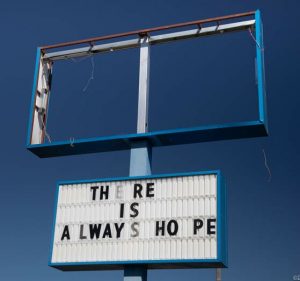 Half of my clients are optimists. They are the ones with the desire trap, they are the ones that are afraid to let go of the rang of the ladder to go to the next level... because their dreams are so juicy... they don"t want reality. They quit, if they feel forced to face reality. Reality is a bitch for an optimist... to hell with it! yeah... lol.
 Consistent with this "I am going to be thrown out of the garden of Eden, so the only thing that has value is what is inside my head... what I can take with me... what no one can take away.
 My hunch is that I am unconsciously following a script: I am at the 10-year burn it all phase... and my health has been (predictably) suffering: I am wondering how much of it is self-induced... The high and secret drama unfolds again... lol... not that funny, by the way. ((An aside: As I am teaching the newest version of The Playground, the science of living effectively in reality needs me to define for people to recognize and tell apart reality from unreality.
 Really, all power comes from the invisible, from the part of reality that you don"t know that you don"t know... once you make even just a little of it known to you, visible to you.
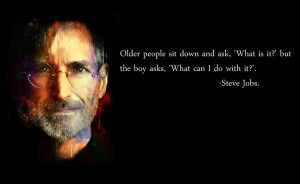 And just like in other parts of life... you can make sure you land softly without breaking bones... the period when i competed on the uneven bars comes to mind... It was dangerous, but not that much...
 Hey, how you do anything is how you do everything... if you can"t or won"t step back here, you won"t step back there.
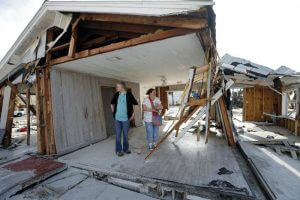 Just like there is nothing wrong with tornados. If you live in an area with frequent tornados... you better remember that... And if you do... your life, your house will be the only one that is spared... like that one house this year that survived a severe storm... at Mexico Beach. All the rest of the houses, the rest of the people"s lives went up in smoke, because they pretended that the storm is not coming...
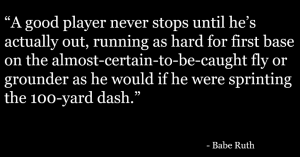 And yet, if you have enough desire to live the life where you can win, where you can experience your power, your magnificence, you"ll summon the courage and the brain power that is needed to comprehend, appreciate, recognize and use the hidden dynamics of human interactions, the hidden dynamics of the human "psyche"... that once known, it is like the sun came out in the dark forest and you don"t have to stumble over roots and branches any longer.
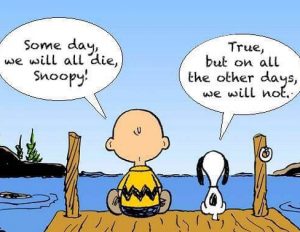
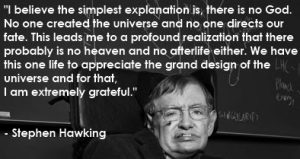 I remember my first Forum, (It wasn"t the Landmark Forum yet... back in 1987) this was one of the biggest issues that came up: that we, humans, live as if we lived forever, as if we never died... and yet we are always in a hurry.
 “Our contradictions. We are in such a hurry to grow up, and then we long for our lost childhood. We make ourselves ill earning money, and then spend all our money on getting well again. We think so much about the future that we neglect the present, and thus experience neither the present nor the future. We live as if we were never going to die, and die as if we had never lived.”
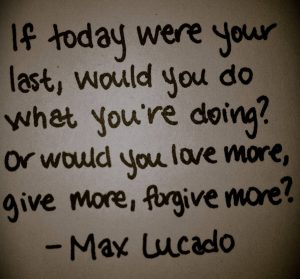
 If you don"t want to waste your life... what has remained, you"ll need to learn a new way to relate to life, to reality, to what is going on.